%20%20--%3E%0A%3Csvg%20version%3D%221.1%22%20id%3D%22Layer_1%22%20xmlns%3D%22http%3A%2F%2Fwww.w3.org%2F2000%2Fsvg%22%20xmlns%3Axlink%3D%22http%3A%2F%2Fwww.w3.org%2F1999%2Fxlink%22%20x%3D%220px%22%20y%3D%220px%22%0A%09%20viewBox%3D%220%200%20684.6%2068.1%22%20style%3D%22enable-background%3Anew%200%200%20684.6%2068.1%3B%22%20xml%3Aspace%3D%22preserve%22%3E%0A%3Cg%3E%0A%09%3Cpath%20d%3D%22M444.1%2C29.3h-17.4v14.5h17.4V29.3z%20M36.4%2C68.1l29.3-50.8V0H50.4L32.9%2C36.8L15.5%2C0H0v68.1h16.7V45.8l12.4%2C22.3H36.4z%0A%09%09%20M49.1%2C68.1h16.6V23.4L49.1%2C52.1V68.1z%20M76.6%2C68.1h45V53.8H93.3V41.6h21V27.1h-21V14.8h28.3V0.1h-45V68.1z%20M175.6%2C68.1h17.3v-68%0A%09%09h-16.5v40.3L150%2C0.1h-17.6v68h16.7V27.7L175.6%2C68.1z%20M235.8%2C14.8h15.4V0.1h-47.4v14.7H219v53.2h16.8V14.8z%20M290.3%2C45.9h-17.1%0A%09%09l7.5-15.6h2L290.3%2C45.9z%20M298.7%2C68.1h18l-32.2-68h-5.7l-32%2C68h18l3.3-7.1h27.1L298.7%2C68.1z%20M325.2%2C68.1h46.2V53.8h-29.6V0.1h-16.7%0A%09%09V68.1z%20M423.7%2C14.8h27.2V0.1H407v68h16.7V14.8z%20M462%2C68.1h46.2V53.8h-29.6V0.1H462V68.1z%20M564.8%2C34.1c0%2C10.7-7.2%2C19.2-18.5%2C19.2%0A%09%09c-11.4%2C0-18.5-8.5-18.5-19.2s7.1-19.2%2C18.5-19.2C557.6%2C14.9%2C564.8%2C23.4%2C564.8%2C34.1%20M580.6%2C34.1c0-19-14.2-34-34.3-34%0A%09%09c-20.2%2C0-34.3%2C15-34.3%2C34c0%2C19%2C14.1%2C34%2C34.3%2C34C566.4%2C68.1%2C580.6%2C53.1%2C580.6%2C34.1%20M604.8%2C20.5c0-4.1%2C3.3-6.2%2C6.7-6.2%0A%09%09c4.4%2C0%2C6.6%2C3%2C6.6%2C6.6h14.7C631.8%2C9.1%2C625.1%2C0.1%2C611%2C0.1c-12%2C0-21.7%2C9.3-21.7%2C20.6c0%2C10.9%2C5.9%2C15.9%2C16.7%2C19.8%0A%09%09c5.2%2C1.8%2C11.5%2C3.2%2C11.5%2C8c0%2C3.3-2.4%2C5.5-6.4%2C5.5c-3.6%2C0-6.6-3-6.6-6.7h-15.2c0%2C11.5%2C7.9%2C20.8%2C21.8%2C20.8c12%2C0%2C21.6-9.3%2C21.6-20.6%0A%09%09c0-10-5.3-16.4-16.7-19.8C610.6%2C26.1%2C604.8%2C25.3%2C604.8%2C20.5%20M670%2C20.9h14.7C683.8%2C9.1%2C677.1%2C0.1%2C663%2C0.1c-12%2C0-21.7%2C9.3-21.7%2C20.6%0A%09%09c0%2C10.9%2C5.9%2C15.9%2C16.7%2C19.8c5.2%2C1.8%2C11.5%2C3.2%2C11.5%2C8c0%2C3.3-2.4%2C5.5-6.4%2C5.5c-3.6%2C0-6.6-3-6.6-6.7h-15.2c0%2C11.5%2C7.9%2C20.8%2C21.8%2C20.8%0A%09%09c12%2C0%2C21.6-9.3%2C21.6-20.6c0-10-5.3-16.4-16.7-19.8c-5.4-1.6-11.3-2.4-11.3-7.2c0-4.1%2C3.3-6.2%2C6.7-6.2C667.7%2C14.4%2C670%2C17.3%2C670%2C20.9%0A%09%09%22%2F%3E%0A%3C%2Fg%3E%0A%3C%2Fsvg%3E%0A)

Sometimes, when we are going through difficult times, we can wonder what the point of a celebration is. Parties and feasts are all well and good when all our needs have been taken care of, but they seem too frivolous in times of hardship. But having something that raises spirits and gives hope is just as important as enduring the struggles.
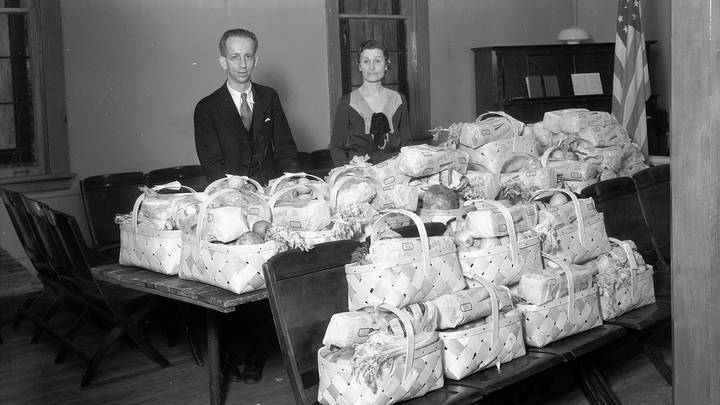
Thanksgiving dinner looked different in the 1930s because the Great Depression had practically decimated the economy. People could barely afford regular food, let alone a typical Thanksgiving meal. But they made the best of what they had and celebrated the holiday as a bright spot during dark days. Even without the staples we think of today, American families used creativity and resourcefulness to make their Thanksgiving special during the Great Depression.

The Main Dish
A traditional turkey was too expensive for Depression-era families, so they improvised with whatever meat they had available. Ironically, some of the poorest families could get turkey if they went to soup kitchens or charities that provided Thanksgiving dinners. Most people, however, made old hen, mock duck, or porcupine meatballs as their Thanksgiving entrée.
Rather than actual porcupine meat, porcupine meatballs were made by sticking rice into the ground beef as a way of making it more filling. Mock duck was similarly created to spread the meal further. It was actually flank steak wrapped around stuffing and roasted. It was a pretty good imitation of a fancy dish, making it feel more like a Thanksgiving meal. An old chicken that could no longer lay eggs could also do in a pinch, but you had to cook it carefully so the meat wasn't too tough.

Sides
Speaking of stuffing, that was one dish that was cheap and easy to come by because all you needed was stale bread and some herbs. People in the 1930s would add more to their stuffing, like apples, raisins, or chestnuts they foraged. Dandelion salads were popular side dishes as well, since it was easy to gather the plants from your yard.
Canned vegetables were also a staple for a Depression-era Thanksgiving. The radio show Aunt Sammy's Homemaker's Half Hour often included recipes to liven up canned foods. Some of the most popular were creamed pearl onions and candied sweet potatoes. Mashed potatoes were also easy to make, as potatoes were inexpensive.

Dessert
Thanksgiving wouldn't be Thanksgiving without dessert, but it got a little tricky when sugar and other baking ingredients were luxuries. Pumpkin pie was only made for dessert if you could get your hands on an actual pumpkin in the 1930s. The canned pumpkin purée was not easy to access, and if it was sold near you, it was probably out of your budget. People made do with other sweet treats, using canned foods once again.
Thanks to sweetened condensed milk, families could make a sugar cream pie for Thanksgiving dessert. Tomato soup was also a main ingredient for an easy dessert: tomato soup cake. It might sound gross to modern foodies, but it was surprisingly sweet and rich, and it used simple ingredients families were sure to have on hand. If all else failed, you could pop open a can of B & M Brown Bread, which was sweet and dense like a cake.