%20%20--%3E%0A%3Csvg%20version%3D%221.1%22%20id%3D%22Layer_1%22%20xmlns%3D%22http%3A%2F%2Fwww.w3.org%2F2000%2Fsvg%22%20xmlns%3Axlink%3D%22http%3A%2F%2Fwww.w3.org%2F1999%2Fxlink%22%20x%3D%220px%22%20y%3D%220px%22%0A%09%20viewBox%3D%220%200%20684.6%2068.1%22%20style%3D%22enable-background%3Anew%200%200%20684.6%2068.1%3B%22%20xml%3Aspace%3D%22preserve%22%3E%0A%3Cg%3E%0A%09%3Cpath%20d%3D%22M444.1%2C29.3h-17.4v14.5h17.4V29.3z%20M36.4%2C68.1l29.3-50.8V0H50.4L32.9%2C36.8L15.5%2C0H0v68.1h16.7V45.8l12.4%2C22.3H36.4z%0A%09%09%20M49.1%2C68.1h16.6V23.4L49.1%2C52.1V68.1z%20M76.6%2C68.1h45V53.8H93.3V41.6h21V27.1h-21V14.8h28.3V0.1h-45V68.1z%20M175.6%2C68.1h17.3v-68%0A%09%09h-16.5v40.3L150%2C0.1h-17.6v68h16.7V27.7L175.6%2C68.1z%20M235.8%2C14.8h15.4V0.1h-47.4v14.7H219v53.2h16.8V14.8z%20M290.3%2C45.9h-17.1%0A%09%09l7.5-15.6h2L290.3%2C45.9z%20M298.7%2C68.1h18l-32.2-68h-5.7l-32%2C68h18l3.3-7.1h27.1L298.7%2C68.1z%20M325.2%2C68.1h46.2V53.8h-29.6V0.1h-16.7%0A%09%09V68.1z%20M423.7%2C14.8h27.2V0.1H407v68h16.7V14.8z%20M462%2C68.1h46.2V53.8h-29.6V0.1H462V68.1z%20M564.8%2C34.1c0%2C10.7-7.2%2C19.2-18.5%2C19.2%0A%09%09c-11.4%2C0-18.5-8.5-18.5-19.2s7.1-19.2%2C18.5-19.2C557.6%2C14.9%2C564.8%2C23.4%2C564.8%2C34.1%20M580.6%2C34.1c0-19-14.2-34-34.3-34%0A%09%09c-20.2%2C0-34.3%2C15-34.3%2C34c0%2C19%2C14.1%2C34%2C34.3%2C34C566.4%2C68.1%2C580.6%2C53.1%2C580.6%2C34.1%20M604.8%2C20.5c0-4.1%2C3.3-6.2%2C6.7-6.2%0A%09%09c4.4%2C0%2C6.6%2C3%2C6.6%2C6.6h14.7C631.8%2C9.1%2C625.1%2C0.1%2C611%2C0.1c-12%2C0-21.7%2C9.3-21.7%2C20.6c0%2C10.9%2C5.9%2C15.9%2C16.7%2C19.8%0A%09%09c5.2%2C1.8%2C11.5%2C3.2%2C11.5%2C8c0%2C3.3-2.4%2C5.5-6.4%2C5.5c-3.6%2C0-6.6-3-6.6-6.7h-15.2c0%2C11.5%2C7.9%2C20.8%2C21.8%2C20.8c12%2C0%2C21.6-9.3%2C21.6-20.6%0A%09%09c0-10-5.3-16.4-16.7-19.8C610.6%2C26.1%2C604.8%2C25.3%2C604.8%2C20.5%20M670%2C20.9h14.7C683.8%2C9.1%2C677.1%2C0.1%2C663%2C0.1c-12%2C0-21.7%2C9.3-21.7%2C20.6%0A%09%09c0%2C10.9%2C5.9%2C15.9%2C16.7%2C19.8c5.2%2C1.8%2C11.5%2C3.2%2C11.5%2C8c0%2C3.3-2.4%2C5.5-6.4%2C5.5c-3.6%2C0-6.6-3-6.6-6.7h-15.2c0%2C11.5%2C7.9%2C20.8%2C21.8%2C20.8%0A%09%09c12%2C0%2C21.6-9.3%2C21.6-20.6c0-10-5.3-16.4-16.7-19.8c-5.4-1.6-11.3-2.4-11.3-7.2c0-4.1%2C3.3-6.2%2C6.7-6.2C667.7%2C14.4%2C670%2C17.3%2C670%2C20.9%0A%09%09%22%2F%3E%0A%3C%2Fg%3E%0A%3C%2Fsvg%3E%0A)

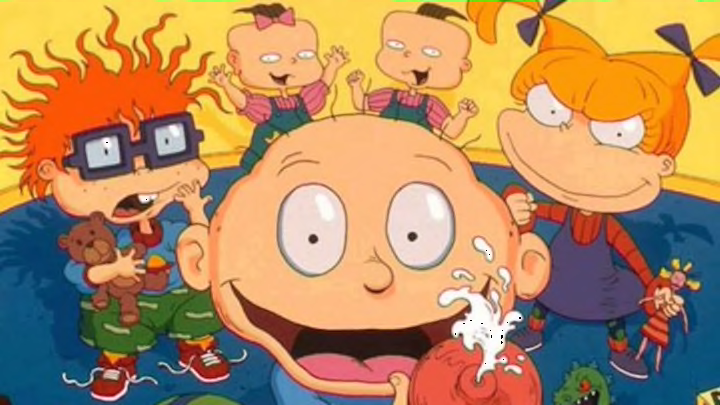
Hang on to your diapies and get the scoop on Rugrats.
1. The Rugrats creators are behind The Simpsons' signature yellow skin and Marge's blue hair.
Arlene Klasky and Gábor Csupó married and started the animation studio Klasky Csupo. Before Rugrats, they worked on The Simpsons. After their divorce, the two stuck together, producing more iconic Nicktoons including Aaahh!!! Real Monsters, The Wild Thornberrys, Rocket Power, and As Told By Ginger.
2. The show was inspired by one incredibly simple question.
Arlene Klasky said she asked herself, "If babies could talk, what would they say?" More pointedly, she also said she wondered about "the logic that drove tiny humans to desperately want to stick their hands in the toilet."
3. All of the babies were voiced by women.
Sure, three of the four main characters were boys, but all of them were little enough to merit high-pitched voices. Christine Cavanaugh, who played Chuckie Finster for more than a decade and also voiced the title characters in Dexter's Laboratory and Babe, died in 2014 at the age of 51.
4. Elizabeth Daily, who voiced Tommy Pickles, once recorded for the show while she was in labor.
She told The Guardian: "The engineer was like: 'Your contractions are coming really quickly now.' And I was like: 'No, I’m fine.' Very soon after that, I had my daughter."
5. Rugrats is the second-longest running Nicktoon of all time.
With 172 episodes, it's second only to SpongeBob SquarePants.
6. The babies have their very own star on the Hollywood Walk of Fame.
Rugrats is the only Nickelodeon show to hold that honor. They're also the proud owners of four Daytime Emmy Awards.
7. Devo frontman Mark Mothersbaugh wrote the theme music.
But that wasn't his only contribution to the show. Chuckie Finster's distinctive look is modeled after Mothersbaugh's. "We both had thick glasses. We're both near-sighted," Mothersbaugh told Splitsider. "And had I pretty wild hair back then. I didn't have kids yet, so it still had color in it."
8. An invoice for Didi reveals the Pickles live in California.
Specifically, at 1258 North Highland Avenue in Los Angeles. In real life, that's the original home of the Klasky Csupo production office.
9. Tommy's shirt is red in the show's first episode.
Powder blue is the color everyone knows and loves from later episodes. In "Tommy's First Birthday" he also sports overalls instead of his usual shirt-and-diaper look.
10. There's a creepy fan conspiracy theory suggesting the babies are all a figment of Angelica's imagination.
In reality, goes the theory, Chuckie died along with his mother and Tommy was stillborn. When the DeVilles had an abortion, Angelica didn't know the baby's gender, so she imagined them as twins.
11. Pat Sajak made a cameo.
In "Chuckie Is Rich," the Wheel of Fortune host presents Chas with a check for $10 million after he wins a sweepstakes.
12. The Rugrats comic strip was once accused of being anti-Semitic.
In 1998, The Washington Post ran a comic strip the week of the Jewish New Year featuring Grandpa Boris, who has a long nose, reciting the Mourner's Kaddish, a solemn prayer. The Anti-Defamation League pushed back against the use of the prayer and called Boris' appearance "reminiscent of Nazi-era depictions of Jews." Nickelodeon apologized, promising not to run that strip again, or any featuring Boris.
13. Rugrats was the first Nicktoon to release a movie.
In 1998, The Rugrats Movie featured voices from a host of celebrities, including David Spade, Whoopi Goldberg, Margaret Cho, and Busta Rhymes. The film introduces Tommy’s baby brother, Dil.
14. A Rugrats-Wild Thornberrys crossover movie exists.
The 2003 release Rugrats Go Wild was just one interesting, if not hugely successful, spin on the cartoon. You might remember All Grown Up featuring the gang as pre-teens. There was also Pre-School Daze, a very short-lived series following Angelica and Susie.
15. A Nickelodeon president once lauded Rugrats as the network's "Mickey Mouse."
In 1998, Nickelodeon's then-president Herb Scannell told The New York Times that Rugrats had "reached a kind of phenomenon status. We think in some ways this is our Mickey Mouse.'' Of the show's all-ages appeal, he noted that: "It's tough to be a kid in an adult world. Kids don't always get it right and adults don't always have all the answers. In that sense, it's a manifesto of the Nickelodeon philosophy."