%20%20--%3E%0A%3Csvg%20version%3D%221.1%22%20id%3D%22Layer_1%22%20xmlns%3D%22http%3A%2F%2Fwww.w3.org%2F2000%2Fsvg%22%20xmlns%3Axlink%3D%22http%3A%2F%2Fwww.w3.org%2F1999%2Fxlink%22%20x%3D%220px%22%20y%3D%220px%22%0A%09%20viewBox%3D%220%200%20684.6%2068.1%22%20style%3D%22enable-background%3Anew%200%200%20684.6%2068.1%3B%22%20xml%3Aspace%3D%22preserve%22%3E%0A%3Cg%3E%0A%09%3Cpath%20d%3D%22M444.1%2C29.3h-17.4v14.5h17.4V29.3z%20M36.4%2C68.1l29.3-50.8V0H50.4L32.9%2C36.8L15.5%2C0H0v68.1h16.7V45.8l12.4%2C22.3H36.4z%0A%09%09%20M49.1%2C68.1h16.6V23.4L49.1%2C52.1V68.1z%20M76.6%2C68.1h45V53.8H93.3V41.6h21V27.1h-21V14.8h28.3V0.1h-45V68.1z%20M175.6%2C68.1h17.3v-68%0A%09%09h-16.5v40.3L150%2C0.1h-17.6v68h16.7V27.7L175.6%2C68.1z%20M235.8%2C14.8h15.4V0.1h-47.4v14.7H219v53.2h16.8V14.8z%20M290.3%2C45.9h-17.1%0A%09%09l7.5-15.6h2L290.3%2C45.9z%20M298.7%2C68.1h18l-32.2-68h-5.7l-32%2C68h18l3.3-7.1h27.1L298.7%2C68.1z%20M325.2%2C68.1h46.2V53.8h-29.6V0.1h-16.7%0A%09%09V68.1z%20M423.7%2C14.8h27.2V0.1H407v68h16.7V14.8z%20M462%2C68.1h46.2V53.8h-29.6V0.1H462V68.1z%20M564.8%2C34.1c0%2C10.7-7.2%2C19.2-18.5%2C19.2%0A%09%09c-11.4%2C0-18.5-8.5-18.5-19.2s7.1-19.2%2C18.5-19.2C557.6%2C14.9%2C564.8%2C23.4%2C564.8%2C34.1%20M580.6%2C34.1c0-19-14.2-34-34.3-34%0A%09%09c-20.2%2C0-34.3%2C15-34.3%2C34c0%2C19%2C14.1%2C34%2C34.3%2C34C566.4%2C68.1%2C580.6%2C53.1%2C580.6%2C34.1%20M604.8%2C20.5c0-4.1%2C3.3-6.2%2C6.7-6.2%0A%09%09c4.4%2C0%2C6.6%2C3%2C6.6%2C6.6h14.7C631.8%2C9.1%2C625.1%2C0.1%2C611%2C0.1c-12%2C0-21.7%2C9.3-21.7%2C20.6c0%2C10.9%2C5.9%2C15.9%2C16.7%2C19.8%0A%09%09c5.2%2C1.8%2C11.5%2C3.2%2C11.5%2C8c0%2C3.3-2.4%2C5.5-6.4%2C5.5c-3.6%2C0-6.6-3-6.6-6.7h-15.2c0%2C11.5%2C7.9%2C20.8%2C21.8%2C20.8c12%2C0%2C21.6-9.3%2C21.6-20.6%0A%09%09c0-10-5.3-16.4-16.7-19.8C610.6%2C26.1%2C604.8%2C25.3%2C604.8%2C20.5%20M670%2C20.9h14.7C683.8%2C9.1%2C677.1%2C0.1%2C663%2C0.1c-12%2C0-21.7%2C9.3-21.7%2C20.6%0A%09%09c0%2C10.9%2C5.9%2C15.9%2C16.7%2C19.8c5.2%2C1.8%2C11.5%2C3.2%2C11.5%2C8c0%2C3.3-2.4%2C5.5-6.4%2C5.5c-3.6%2C0-6.6-3-6.6-6.7h-15.2c0%2C11.5%2C7.9%2C20.8%2C21.8%2C20.8%0A%09%09c12%2C0%2C21.6-9.3%2C21.6-20.6c0-10-5.3-16.4-16.7-19.8c-5.4-1.6-11.3-2.4-11.3-7.2c0-4.1%2C3.3-6.2%2C6.7-6.2C667.7%2C14.4%2C670%2C17.3%2C670%2C20.9%0A%09%09%22%2F%3E%0A%3C%2Fg%3E%0A%3C%2Fsvg%3E%0A)

Throughout history, there were people who did not want women to vote. Women would work, they would pay taxes, they would technically be considered citizens... but voting was for men. In America, when the right to vote was extended to include all races, all social positions, and all incomes, women were still not included. It didn't matter if a man was illiterate, had been to jail, or if he was the town drunk. He could vote, and a woman, no matter who she was, could not.
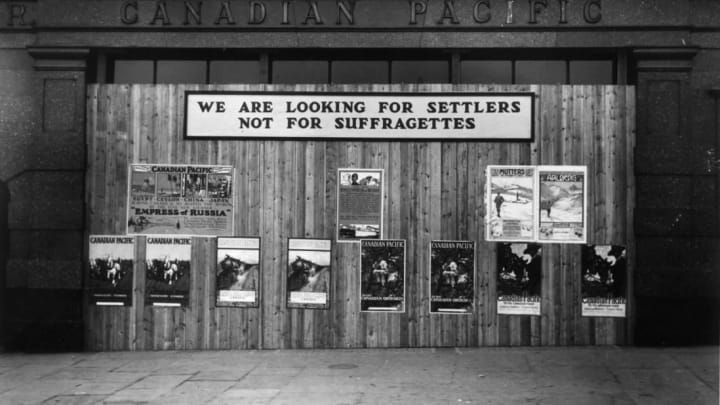
Women suffragists (suffragettes) began campaigning in democratic countries all over the world to change this, starting in the mid-19th century. Their campaigns were largely peaceful and dignified... at least by 21st century standards. But by 19th century standards, these women were abhorrent and indecent, making fools of themselves by demanding to be treated like men.
1. "Did I save my country for this?"
Find the cartoon here.
2. "What I Would Do With the Suffragists"
Find the cartoon here.
3. "Origin and Development of a Suffragette"
Find the cartoon here.
4. "Nobody Loves Me"
Find the cartoon here.
5. "The Suffragette Bar"
Find the cartoon here.
6. "Suffragette Vote Getting"
Find the cartoon here.
7. "For a Suffragette"
To save you the squinting, this reads: "The Ducking-Stool and a nice deep pool were our fore-fathers plan for a scold, and could I have my way, each Suffragette to-day, Should 'take the chair' and find the water cold." Find the full cartoon here.
8. "I want to Vote, but my wife won't let me"
Find the cartoon here.
9. "Afternoon Tea"
This political cartoon depicts what life was like for imprisoned suffragettes. One big long party for "martyred" socialites. Find the cartoon here.
10. "Darns her men, but not her sox"
Find the cartoon here.
11. "An Up-to-Date Suffragette"
In this cartoon, we see a suffragette assuming another traditionally male duty, much to the erotic delight of the men around her.
12. "No votes. Thank you."
Notice the gawky, frenzied suffragette running behind the poised and graceful pillar of true womanhood in this cartoon. The message being, a real woman wants no part of anything as base as politics.
Some of these cartoons are courtesy of Woman Suffrage Memorabilia, curated by author Kenneth Florey, writer of Women's Suffrage Memorabilia: An Illustrated Historical Study.