%20%20--%3E%0A%3Csvg%20version%3D%221.1%22%20id%3D%22Layer_1%22%20xmlns%3D%22http%3A%2F%2Fwww.w3.org%2F2000%2Fsvg%22%20xmlns%3Axlink%3D%22http%3A%2F%2Fwww.w3.org%2F1999%2Fxlink%22%20x%3D%220px%22%20y%3D%220px%22%0A%09%20viewBox%3D%220%200%20684.6%2068.1%22%20style%3D%22enable-background%3Anew%200%200%20684.6%2068.1%3B%22%20xml%3Aspace%3D%22preserve%22%3E%0A%3Cg%3E%0A%09%3Cpath%20d%3D%22M444.1%2C29.3h-17.4v14.5h17.4V29.3z%20M36.4%2C68.1l29.3-50.8V0H50.4L32.9%2C36.8L15.5%2C0H0v68.1h16.7V45.8l12.4%2C22.3H36.4z%0A%09%09%20M49.1%2C68.1h16.6V23.4L49.1%2C52.1V68.1z%20M76.6%2C68.1h45V53.8H93.3V41.6h21V27.1h-21V14.8h28.3V0.1h-45V68.1z%20M175.6%2C68.1h17.3v-68%0A%09%09h-16.5v40.3L150%2C0.1h-17.6v68h16.7V27.7L175.6%2C68.1z%20M235.8%2C14.8h15.4V0.1h-47.4v14.7H219v53.2h16.8V14.8z%20M290.3%2C45.9h-17.1%0A%09%09l7.5-15.6h2L290.3%2C45.9z%20M298.7%2C68.1h18l-32.2-68h-5.7l-32%2C68h18l3.3-7.1h27.1L298.7%2C68.1z%20M325.2%2C68.1h46.2V53.8h-29.6V0.1h-16.7%0A%09%09V68.1z%20M423.7%2C14.8h27.2V0.1H407v68h16.7V14.8z%20M462%2C68.1h46.2V53.8h-29.6V0.1H462V68.1z%20M564.8%2C34.1c0%2C10.7-7.2%2C19.2-18.5%2C19.2%0A%09%09c-11.4%2C0-18.5-8.5-18.5-19.2s7.1-19.2%2C18.5-19.2C557.6%2C14.9%2C564.8%2C23.4%2C564.8%2C34.1%20M580.6%2C34.1c0-19-14.2-34-34.3-34%0A%09%09c-20.2%2C0-34.3%2C15-34.3%2C34c0%2C19%2C14.1%2C34%2C34.3%2C34C566.4%2C68.1%2C580.6%2C53.1%2C580.6%2C34.1%20M604.8%2C20.5c0-4.1%2C3.3-6.2%2C6.7-6.2%0A%09%09c4.4%2C0%2C6.6%2C3%2C6.6%2C6.6h14.7C631.8%2C9.1%2C625.1%2C0.1%2C611%2C0.1c-12%2C0-21.7%2C9.3-21.7%2C20.6c0%2C10.9%2C5.9%2C15.9%2C16.7%2C19.8%0A%09%09c5.2%2C1.8%2C11.5%2C3.2%2C11.5%2C8c0%2C3.3-2.4%2C5.5-6.4%2C5.5c-3.6%2C0-6.6-3-6.6-6.7h-15.2c0%2C11.5%2C7.9%2C20.8%2C21.8%2C20.8c12%2C0%2C21.6-9.3%2C21.6-20.6%0A%09%09c0-10-5.3-16.4-16.7-19.8C610.6%2C26.1%2C604.8%2C25.3%2C604.8%2C20.5%20M670%2C20.9h14.7C683.8%2C9.1%2C677.1%2C0.1%2C663%2C0.1c-12%2C0-21.7%2C9.3-21.7%2C20.6%0A%09%09c0%2C10.9%2C5.9%2C15.9%2C16.7%2C19.8c5.2%2C1.8%2C11.5%2C3.2%2C11.5%2C8c0%2C3.3-2.4%2C5.5-6.4%2C5.5c-3.6%2C0-6.6-3-6.6-6.7h-15.2c0%2C11.5%2C7.9%2C20.8%2C21.8%2C20.8%0A%09%09c12%2C0%2C21.6-9.3%2C21.6-20.6c0-10-5.3-16.4-16.7-19.8c-5.4-1.6-11.3-2.4-11.3-7.2c0-4.1%2C3.3-6.2%2C6.7-6.2C667.7%2C14.4%2C670%2C17.3%2C670%2C20.9%0A%09%09%22%2F%3E%0A%3C%2Fg%3E%0A%3C%2Fsvg%3E%0A)

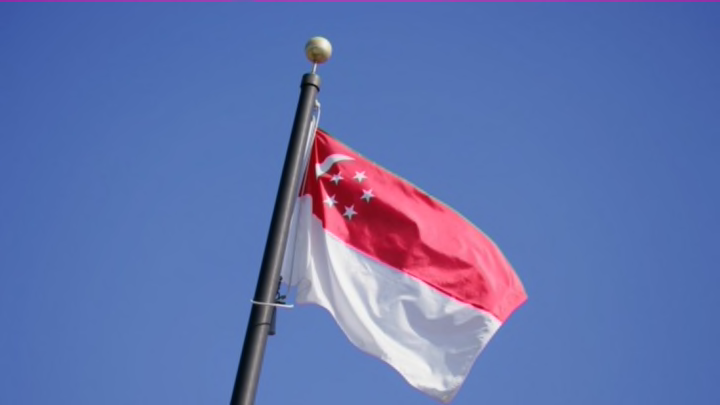
In 1963, Singapore declared its independence from Great Britain. Without much land area or natural resources of its own, the new nation secured some protection and economic help by joining Malaya, Sabah and Sarawak to form the Federation of Malaysia. But just a few years later, Singapore was out on its own.
The union was rocky right from the start, with Singaporean state leaders disagreeing with the federal officials on economic policy and federal affirmative action laws that gave preferential treatment to ethnic Malays. Meanwhile, Malay- and Chinese-Singaporean civilians clashed on the streets in a series of race riots that killed dozens of people, injured hundreds more, damaged infrastructure, caused food shortages, and further strained Singapore’s relations with the other states and federal government.
Federal authorities lost their patience quickly and leaders on both sides realized that the union was not sustainable. Forty-eight years ago this month, on August 9, 1965, the Parliament of Malaysia voted 126-0 to expel Singapore from the federation.
While other countries strived and fought for their independence, Singapore’s seems more like political fallout, or a punishment doled out to them. Just hours before the vote that created the new Republic of Singapore, its first Prime Minister, Lee Kuan Yew, broke down in tears during a press conference, saying, “For me, it is a moment of anguish. All my life, my whole adult life, I have believed in the merger and unity of the two territories." Wikipedia, in reference to the anniversary, even calls Singapore the “first and only country to date to gain independence unwillingly.”
But Singapore’s independence didn’t exactly happen without any input or action on the part of the state, argues Singaporean political blogger Palaniyapan:
While most nations fought to be sovereign, we didn't. It is often regarded that independence was unexpectedly thrusted upon us by Malaysia. Putatively neither did we possess a unique identity to preserve or common cause to pursue. Also, given our small size and lack of natural resources, complete self-determination appeared as both an unnecessary and unfeasible pursuit. This has led many to believe that Singapore’s eventual independence was an “accident.” But if one were to dig deeper into the events preceding August 9th 1965, these commonly held beliefs get challenged: One would realize that our peaceful, unexpected independence belies the fact that it’s Singapore's active insistence on values such as equality and multi-racialism alongside demand for a higher degree of self-determination which precipitated its secession from Malaysia. …So was independence thrusted by Malaysia? A straightforward reading of history, would afford an affirmative to the question. Singapore never explicitly demanded to be independent. Our preferred option was to be part of Federal Malaysia. However looking deeply, one would find that though it was Malaysia which broached the topic of secession first, the move was to a large extent precipitated by Singapore’s actions. Also, when given with the choice of moving ahead as the part of the union and accepting the compromise of having limited say in governance and giving up on the vision of Malaysian Malaysia where all races were treated equally, we consistently stuck to our convictions despite the attendant risks—which had been fully grasped.
In other words, the collective Singaporean vision of what society and government should look like was revolutionary enough to force Malaysia to stage the bloodless revolution for them. That’s actually a pretty good start for a national narrative, and something worth toasting with a Singapore Sling.